
The Synthesis in the Dialectic
Finding the synthesis between identities is important to find the value you bring. It can feel easier to separate our identity as a therapist from our identity as a client. The reality is that when we can hold both identities together, we become stronger as both a therapist and an individual. The synthesis of our identities allows us to deconstruct the "us v. them" mentality that often separates therapists and clients. Through the synthesis, we provide opportunities for ourselves, our teams, and our clients to grow through increased empathy, deeper clinical insight, and a uniquely integrated understanding of lived experience and theory.
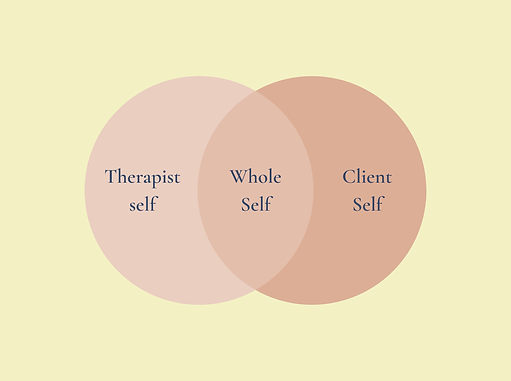
Sometimes we can feel tension between our identities. When we identify this dialectic, we can reach a synthesis. Here are some examples of dialectical tension that may arise:

Finding a synthesis can be difficult. Some barriers are:
Worry that lived experience will be misinterpreted as incompetence
Past team experiences that discouraged openness
Fear of being judged by the DBT community
Fear of being seen as "too close" to the work
Internalized stigma about needing treatment
Perfectionism or high standards for “competent therapists”
The Path to Finding the Synthesis

Naming Both Identities
Synthesis starts when both identities are acknowledged as legitimate and valuable.
Using "and" language
Synthesis grows when "either/ or" thinking is replaced with "both/ and."
Hold it internally first
Synthesis does not require disclosure; it can exist quietly in how you think, reflect, and practice.
Reflect instead of Compare
Synthesis strengthens when we reflect instead of compare.
Let Tension Exist
Synthesis acknowledges tension as a natural and meaningful part of holding multiple identities.
Offer Self Compassion
Synthesis deepens when you extend the same compassion to yourself that you offer to clients.
Finding the Synthesis is an ongoing practice of holding the complexity of humanness with curiosity, compassion, and care. When both the therapist and client selves are allowed to coexist, the whole self can show up , allowing growth for ourselves, our teams, and our clients.